
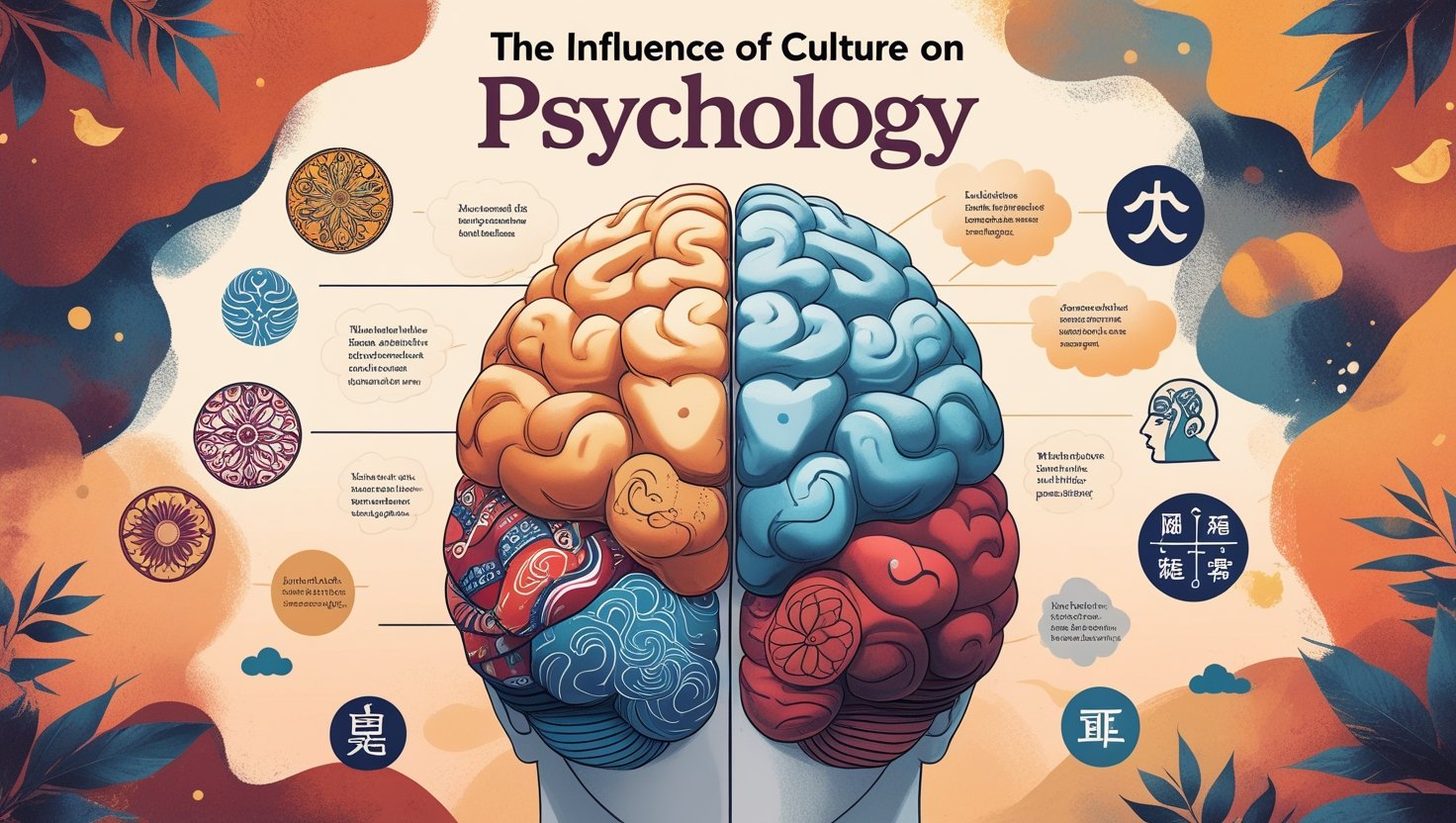
The topic of culture and psychology is very deep, and it is important to understand it if we want to see human behavior in its real form. Culture is a social framework that defines the way of life of a human being, such as their values, beliefs, rituals, and social expectations. Culture is not limited only to tongue and food and drink, but it also deeply influences the way of thinking, understanding, and feeling. The job of Psychology is to understand the behavior of a human being and analyze their emotions and thoughts, but if we ignore the culture, then this analysis remains incomplete. People are different in every culture.
We react differently to something, like expressing grief is different in every culture or the way of appreciating success is different A person from Western culture celebrates independence whereas in Eastern cultures collectivism and family bonding are given more importance Hence it is important to understand how culture shapes the psychological responses of people When we understand culture, we can feel others better and it becomes easier to understand their psychology This blog will explore this aspect of how culture and psychology come together to shape human behaviour
How can we become more tolerant and inclusive by understanding both of these?
Cultural Norms and Their Impact on Behavior:
Every society has its unique norms and values that deeply influence people’s behavior. Cultural norms are unwritten rules that tell what is acceptable in a society and what is not. These norms have an impact on the daily behavior of every individual, such as the way people talk, the way they show respect, and the way they express their feelings. For example, in Western cultures, direct communication is preferred, while in Asian cultures, indirect and polite methods are given more importance. Similarly, gender roles are also influenced by culture. In some cultures, women are made more passive and dependent. While in some cultures, they are considered independent and equal.
These norms not only impact social expectations but also psychological development If a child is brought up in a culture where being expressive is considered acceptable, he learns to suppress his emotions while a child from another culture becomes open and confident Cultural norms shape the identity of every person and everything from their decisions to their reactions happens due to these norms If we want to understand the behaviour of a person, it is important to first understand his cultural background Culture is an invisible force which silently guides human behaviour all the time and we realize it then it is when we compare people from different cultures.
The Role of Cultural Identity in Shaping the Self:
Cultural identity plays a very important role in a person’s self-image and self-worth. When a person is born in a particular culture, they start adopting those values, beliefs, and traditions from childhood. This identity shapes his thinking, understanding, and perspective of the world. For example, if modesty and group harmony are appreciated in a culture, a child of that culture will try to fit in with the group by putting aside his individuality. Whereas, if personal achievement and independence are valued in a culture, the child will focus more on his goals. Cultural identity is deeply rooted in every individual’s emotional and psychological development.
When a person feels proud of his culture, his confidence increases, and he becomes more balanced and mentally strong. But when his identity is rejected or he is considered inferior, he faces an identity crisis, and this hurts his self-esteem. Cultural identity is not just limited to race or religion, but rather it extends to language, lifestyle, traditions, and communication style. When we try to understand someone’s identity, in reality, we are trying to understand the emotional world of that person. This is not just identity. It shapes a person’s behavior, but it also has an impact on their life decisions, their relationships, and even their reactions.
Mental Health Perceptions across Cultures:
The perception of mental health varies across cultures, and these perceptions influence people’s behaviour and their readiness to seek help. In some cultures, mental illness is considered a normal health issue where people discuss their issues openly and turn to therapy or counselling. Whereas in some cultures, it is considered a weakness or a matter of shame, and people try to hide it. In these cultures, people believe that if a person has anxiety, depression, or stress, he or she is weak or crazy. This stigma makes a person feel lonely and isolated, and he or she tries to hide his or her problems.
He does not share the matter with anyone; its effect is not just on their mental health but also on their overall well-being. Culture decides how people interpret emotional problems. In some places, it is considered a spiritual problem, while in some places it is considered a medical issue. For this reason, methods of treatment are also different according to the culture. In some cultures, taking medicines is common, while in some cultures, dua taweez or family support is considered more important. If mental health professionals do therapy after considering the cultural background of the patients, then more effective results are obtained. Every culture has its viewpoint, but the most important thing is that mental health should be given importance and stigma should be removed so that people can openly share their issues and live a better life.
Cross-Cultural Psychology – Bridging Differences:
Cross-cultural psychology is a field that tries to understand the behavior of people from different cultures by comparing them. This field analyzes whether psychological theories apply equally in every culture or not. Every culture has its norms, values , and traditions that shape the emotional and cognitive responses of people in that society. For example, an emotion such as anger or shame is expressed in different ways in every culture. In some cultures, being expressive is encouraged, while in others, hiding emotions is considered a positive trait. Cross-cultural psychologists look at which psychological processes can be considered universal. And what is considered culturally specific?
This approach helps to remove misunderstandings and biases and produces better understanding between people The process of learning and healing is more effective in educational and clinical settings if work is done by understanding cross-cultural differences This field also highlights how cultural identity maintains its place despite globalization The real purpose of cross-cultural psychology is that we can develop an inclusive and balanced psychological framework by understanding and respecting the unique psychological aspects of each culture This approach not only improves scientific understanding but also promotes human empathy and global harmony.
Conclusion:
Every person’s way of thinking, feeling, and behaving is deeply linked to their cultural background. If we try to understand psychology from only one angle, the analysis will remain incomplete. Culture allows us to understand psychology in a new dimension. When we appreciate the perspectives of different cultures, we begin to understand human behavior more deeply. Every culture has its wisdom. It has its way of handling stress, maintaining relationships, and managing emotions. When we accept these differences and try to understand them, we only understand our differences. Not just one, but we become closer to understanding the entire humanity. The real purpose of psychology is not to map everyone on a single scale, but to understand that every person evolves, taking the influence of their environment and culture. In fields like education, mental health, and social behavior, if there is cultural awareness, then their influence is deeper and sustainable. This blog explains how the union of culture and psychology can become a better way to understand human behavior. When we embrace diversity, we also keep alive values like empathy, tolerance, and understanding, and these values are prevalent in today’s global world.
FAQs:
Q1: How does culture affect a person’s psychological behavior?
A1: Culture plays a major role in shaping how a person thinks, feels, and reacts to different situations. It defines their values, traditions, and social expectations, which directly influence how they express emotions, handle stress, and interact with others. For example, while some cultures promote independence, others emphasize family unity. Ignoring culture in psychology can lead to an incomplete understanding of human behavior.
Q2: What are cultural norms and how do they influence daily behavior?
A2: Cultural norms are unwritten social rules that define what is acceptable and unacceptable in a society. These norms influence how people speak, show respect, express emotions, and even define gender roles. A person raised in a culture that encourages open communication will behave differently from someone raised in a culture that values politeness and indirect speech. These norms shape not only personal identity but also emotional development and decision-making.
Q3: What is cultural identity and how does it shape the self?
A3: Cultural identity refers to the sense of belonging a person feels toward a particular culture. This identity is built through language, traditions, values, and lifestyle, and it strongly influences self-image, confidence, and worldview. A person proud of their culture feels more confident and emotionally balanced, while someone whose cultural identity is rejected may suffer from low self-esteem or identity crisis.
Q4: How do different cultures view mental health?
A4: Perceptions of mental health vary greatly across cultures. In some societies, mental illness is accepted as a medical issue and openly discussed, while in others, it is seen as a weakness or shameful topic. This stigma prevents many people from seeking help and worsens their mental well-being. Understanding cultural beliefs about mental health helps professionals offer more respectful and effective support to individuals from diverse backgrounds.
Q5: What is cross-cultural psychology and why is it important?
A5: Cross-cultural psychology studies how psychological processes differ or remain the same across cultures. It helps determine which behaviors are universal and which are culture-specific. This field reduces misunderstandings, promotes empathy, and helps build inclusive environments in schools, workplaces, and clinics. It supports the idea that understanding cultural diversity improves both scientific research and human relationships in a globalized world.